World Record Evidence Guide: Video, Witnesses & Documents You Need Before You Apply
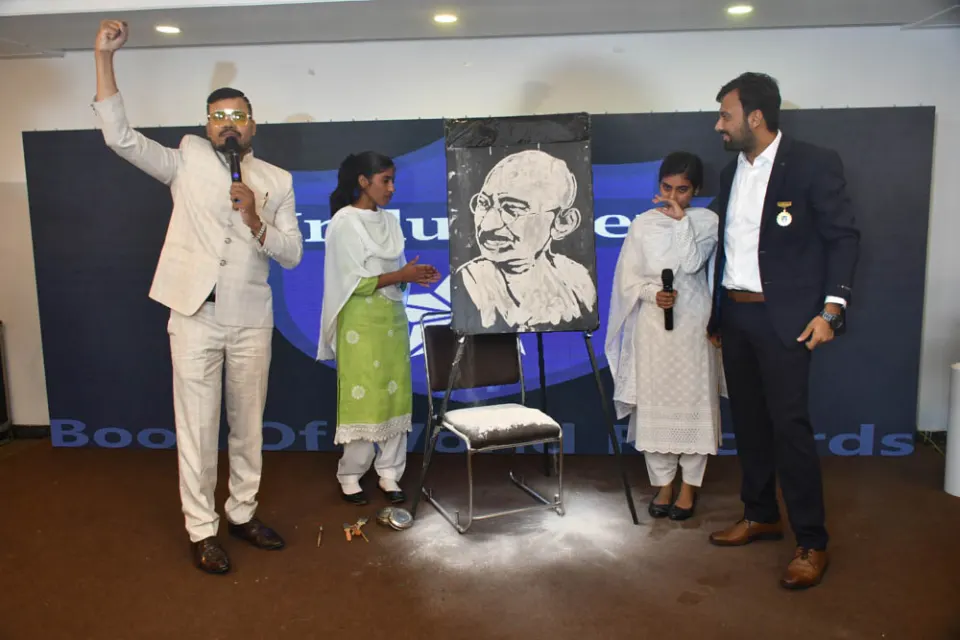
Short answer: a world record application succeeds or fails on evidence. Before you apply, be able to show three things clearly: who made the attempt (identity and age), what exactly was achieved (a measurable result with clear rules), and proof that it happened as claimed (uncut video, photos, witness details and any media coverage). This guide explains how to prepare each one. It also covers what happens after you submit an application to the Influencer Book of World Records (IBWR).
It is written for first-time applicants: parents applying for a child, students, artists, athletes, teachers and organisations planning a group attempt. If you already know what you want to attempt, you can start the online application and upload proofs later. Many applications fall short simply because the evidence was never captured, so read on first.
Why evidence matters more than the attempt itself
A record book cannot be present at every attempt, so reviewers judge your claim on what you send them. Two attempts can achieve the same result, and only one is approved, because only one of them was documented properly. An unclear video, a missing count or a witness with no contact details all leave reviewers with doubt. Under the IBWR application terms, a record can be closed if adequate evidence is not provided to support the attempt.
Large record organisations say the same thing. Guinness World Records' published guidance on collecting and submitting evidence notes that a large share of the evidence it receives is not approved because it is insufficient or incorrect. Every record book has its own rules, but the principle is universal: document the attempt as if the reviewer was not there, because they were not.
Step 1: Define a record that can actually be measured
Before you think about cameras or witnesses, write your record down in one sentence that contains a number. Reviewers need to compare your result against something objective. Good record definitions answer four questions:
- What is being done? For example, "solving two-digit addition and subtraction sums mentally", or "reciting the Hanuman Chalisa".
- How is it measured? By count, by time, by distance, by weight, or by size.
- What are the limits? A time window ("in one minute"), a distance ("10 km"), an age ("at 3 years of age") or equipment rules ("blindfolded", "on inline skates").
- What counts and what does not? For example, a wrong answer is not counted, a dropped item ends the attempt, or a pause longer than ten seconds ends the attempt.
Look at how published record titles on the IBWR site are written. They are specific: solving 150 two-digit calculations in 90 seconds, 450 skips in 3 minutes 33 seconds, reciting 25 national leaders in 47 seconds. A vague claim such as "very fast at maths" or "a talented skater" cannot be verified. A measured claim can.
If you are unsure whether to break an existing record or create a new one, browse the records directory and the record categories first. The IBWR set-a-record page explicitly welcomes original ideas. A new idea still needs the same measurable definition.
Step 2: Gather identity and eligibility documents
Every claim has to be tied to a real, identifiable person or organisation. The IBWR application form asks for the record holder's name, WhatsApp number and email address. Date of birth, city, state and gender are optional fields. The proofs section asks for:
- Proof of birth, such as a birth certificate or 10th-class mark sheet, and proof of address, such as an Aadhaar card or passport. This matters most for age-based records ("youngest to…", "at 2 years and 6 months").
- One clear picture of the applicant while attempting.
- Newspaper or TV coverage of the attempt, if available.
- Contact details of the witnesses of the attempt.
Uploads can be images (JPG, PNG, WEBP, HEIC) or PDF files of up to 20 MB each. They are optional at the application stage: you can also share them later when the team contacts you. Documents are stored privately for the review team. Even so, having them ready speeds things up.
Tip for age-based records: calculate the exact age on the day of the attempt (years, months and days) and make sure it matches the date of birth on the document you submit. A mismatch here is one of the easiest ways to delay a claim.
Step 3: Record a video that proves the result on its own
For most performance records, video is the single most important piece of evidence. A reviewer should be able to watch it and reach the same result you are claiming, without needing your explanation. Use this checklist.
Before you press record
- Test the setup. Do a full practice run with the camera in its final position. Check the framing, the lighting and the sound.
- Use a stable camera. Mount the phone or camera on a tripod or a fixed surface. Handheld, shaky footage makes counts hard to verify.
- Make sure the whole action is in frame. For a flash-card record, the card and the child's response must both be visible and audible. For a skipping record, the feet and the rope must be in frame throughout.
- Check storage and battery. Long attempts can fill a phone or drain a battery. Running out halfway through can mean starting again.
During the attempt
- Open with an introduction. State the attempter's name, the date, the location and the record being attempted. Guinness World Records recommends a similar short introduction on camera.
- Show the timer or the measuring tool. For timed records, keep a visible stopwatch or clock in the frame, or film the timekeeper starting and stopping it.
- Film one continuous take. Do not stop and restart, and do not edit. Uncut footage is far more credible than a highlight reel. Keep the original file and share an edited version separately if you want one for social media.
- Count out loud where possible. A witness or helper counting clearly makes a count-based claim much easier to verify.
- For long attempts, use a second camera. A wide shot of the whole scene plus a closer shot of the action covers you if one device fails.
After the attempt
- Film the final measurement. Show the final count, time, distance or size on camera, ideally confirmed by a witness.
- Save the original file. Messaging apps compress video heavily. Keep the original from the device, and upload it to a cloud drive or YouTube (unlisted is fine) so you can share a full-quality link.
- Write down timestamps. For attempts longer than a few minutes, note the times of key moments, such as the start, the halfway mark and the finish, so a reviewer can check them quickly.
Step 4: Choose witnesses who make your claim stronger
Witnesses confirm that the attempt happened as shown and that the result is genuine. The IBWR form asks for their contact details as one of the proofs. When choosing witnesses:
- Prefer independent people. A teacher, coach, school principal, doctor, local official or community leader carries more weight than a close family member. Many record organisations ask for witnesses with no personal connection to the attempter.
- Use at least two witnesses. Two independent witnesses are a common minimum across record organisations, and they also protect you if one becomes unreachable later.
- Collect their details on the day. Get each witness's full name, designation, phone number and a short signed statement. The statement should say what they saw, the date, the place, and the result.
- Add a timekeeper for timed records. If the record is about speed, ask one person to own the stopwatch and confirm the time.
For larger events, IBWR also lets you indicate on the application whether you would like to invite a judge. If you do, the IBWR event management team will contact you. You can read about the IBWR chief editors and adjudicators on the site.
Step 5: Collect supporting proof
Supporting proof is not always required, but it helps a reviewer understand the context of a claim:
- Photographs of the setup, the attempt and the final result, including at least one good photo of the applicant during the attempt.
- Media coverage, such as newspaper cuttings, TV links or credible online news articles about the attempt.
- Certificates or results from recognised competitions, for skill-based records such as abacus, chess, music or sport.
- Published material for literature records, such as the ISBN page or publisher details of a book.
- Event documents for mass attempts, such as participant registers, attendance sheets and organiser letters on letterhead.
Step 6: Write a clear claim summary
Whoever reviews your claim will read many applications. Make yours easy to understand. In the application's "What record you want to apply for" field, write a short, factual summary:
- The record title in one line, with the number. For example: "Most Hanuman Chalisa recitations in one hour by a 7-year-old".
- The date, time and place of the attempt.
- The exact result achieved.
- The rules you followed: what counted and what did not.
- Where the evidence is: the video link, the number of witnesses, and any media coverage.
Avoid exaggeration. Phrases like "first in the universe" or "unbeatable" do not help a claim. A plain, accurate description does.
What happens after you apply to IBWR
The IBWR set-a-record page describes the process in eight steps. In summary:
- Submit the online application. Describe your attempt in detail, including the tentative date, time and location, and say whether you want to invite a judge. The application form takes about five minutes and gives you a reference number on submission.
- Wait for the IBWR team's response. They will guide you on how to submit evidence for your particular claim. If you asked for a judge, the event management team contacts you.
- Send all required documents. According to the IBWR process, the team reviews submissions within 7–10 working days and will reach out if anything is missing.
- Receive the decision by email.
- If approved, check the confirmation email carefully. Report any spelling or detail that needs changing, because this information is used for your record entry.
- Order the Record Holder's Pack if you choose to. The IBWR process states that processing and dispatch take 2–3 weeks after payment. Ask the team directly for current pack details and charges. Prices are not published on the website, so do not rely on third-party figures.
- Send a high-quality photo of yourself with the pack. It is used for record documentation.
- Your record entry is completed and published in the Influencer Book of World Records.
Approval is never automatic. Every claim is reviewed, and the IBWR terms allow a record to be cancelled if there are signs of wrongdoing or the evidence does not support it.
Common reasons applications are delayed
- The video is edited, cut or too short to show the full attempt.
- The count or time cannot be verified from the footage.
- The age on the documents does not match the claim.
- Witness details are missing, or the witnesses cannot be reached.
- The record is not clearly defined, so there is nothing objective to measure.
- The same claim is submitted twice with slightly different details, which creates confusion and duplicate entries.
- Contact details are wrong, especially the WhatsApp number or email the team uses to reach you.
Safety and responsibility
The IBWR application terms are clear that the organisation does not take responsibility for the safety of participants. The applicant is responsible for safety measures and for complying with government regulations and health and safety rules. In practice:
- Do not attempt anything that puts the attempter, helpers or spectators at risk. No record is worth an injury.
- For physical and endurance records, consult a qualified coach or doctor and have first aid available.
- For records involving children, keep the attempt short, playful and pressure-free (see our guide to world record ideas for kids).
- For public events and mass attempts, obtain any permissions the venue or local authority requires.
Your evidence checklist
Before you click submit, check that you have:
- A one-sentence record definition with a number and clear rules
- Proof of birth and address for the record holder
- One uncut video of the full attempt, with an introduction and a visible timer or measurement
- The original video file saved, or a full-quality link
- At least one clear photo of the applicant during the attempt
- Names, designations and phone numbers of independent witnesses, plus signed statements
- Any media coverage, certificates or event documents
- A short, factual claim summary
- Correct WhatsApp number and email address
Frequently asked questions
Do I need to upload all proofs when I apply?
No. On the IBWR application form, proof uploads are optional at the start. You can share them later when the team contacts you. Having them ready does make the review faster.
How long does the IBWR review take?
According to the process published on the set-a-record page, the team reviews submitted documents within 7–10 working days. It contacts you if any information is missing. The decision is sent by email.
Can I set a completely new record instead of breaking an existing one?
Yes. IBWR encourages original record ideas. A new record still needs a measurable definition and complete evidence, so define the rules before you attempt it.
Can a judge attend my attempt?
The application form lets you indicate whether you would like to invite a judge. If you do, the IBWR event management team will contact you about it.
Is approval guaranteed if I submit everything?
No. Every claim is reviewed on its merits. Complete, honest evidence gives your claim the best chance, but no record organisation can guarantee approval in advance.
Who can I contact if I have questions before applying?
You can reach the IBWR team through the contact page or on WhatsApp at +91 91664 90296, the number shown on the application form.
Ready to apply?
If your record is clearly defined and your evidence is in place, start your record application. It takes about five minutes. To see how other achievers documented their records, browse the records directory or the young achievers section.