World Record Ideas for Kids: Real Examples by Age and How Parents Can Apply
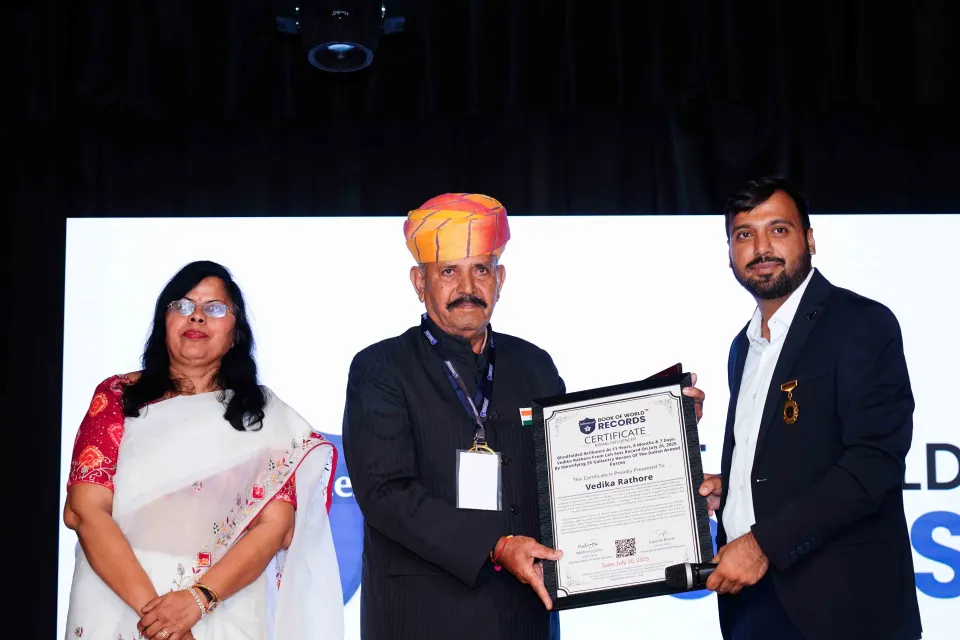
Short answer: the best world record ideas for kids grow out of something the child already enjoys and does well. That might be recognising flash cards, reciting verses, mental maths, skating, music or art. You then turn it into a measurable challenge, with a count, a time limit or an age, and document it properly. More than 340 of the records in the Influencer Book of World Records (IBWR) are in its Young Achievers & Kids category. The real examples below show what kinds of achievements have been recognised and how parents can plan an attempt safely.
This guide is for parents, teachers and coaches. It does not promise that any idea will become a record, because every claim is reviewed on its own evidence. It will help you choose an idea that suits your child, define it clearly and avoid common mistakes.
Before you choose an idea: three questions for parents
- Does my child already enjoy this? The strongest children's records are natural extensions of play, learning or a hobby. If the child is not enjoying the practice, it is the wrong idea.
- Can the result be measured? "Knows a lot of cars" cannot be verified. "Identifies 60 car models in 1 minute 15 seconds" can.
- Is it safe at this age? Choose activities that suit your child's stage of development and never push through tiredness, pain or distress.
World record ideas for toddlers (about 1 to 3 years)
At this age, records are usually about early recognition and memory, shown during short, playful sessions. Published IBWR records include:
- Flash card recognition. Nihira, aged 15 months, identified 52 flash cards and 30 Hindu gods. Yashi Saxena is recognised as a 20-month-old who knows alphabets, numbers and 50+ flash cards.
- Object and vehicle identification. Praman Vrushab M. identified 60 car models in 1 minute 15 seconds. Hassan Zayn Malik named 30 cars in under a minute.
- General knowledge. Jaksh Bansal identified and recited all the planets at 3 years of age. Daksh A S is recognised for knowledge of human body systems at a toddler age.
- Multi-skill records. Avyaan Das combined identifying objects, solving jumbled letters, matching and chanting mantras at about 2.5 years.
How to make a toddler idea measurable: fix the number of items, such as 50 flash cards. Decide whether there is a time limit. Record the child's exact age on the day in years, months and days, and film every card and every answer clearly.
World record ideas for young children (about 3 to 7 years)
Between three and seven, children can often recite, read and perform short physical or musical routines. IBWR examples include:
- Recitation of verses and texts. Sanav Sangtani recited the complete Hanuman Chalisa in under one minute. G.S. Samyuktha made a fast recitation of 50 Thirukkural verses at age 5, and Sanvi Jain holds a record for Sanskrit stotra recitation.
- Reading and language. Maanvi Bhansali is recognised for mastery of Hindi reading at 4 years and 7 months.
- National knowledge and anthem. M. Vihasri is recognised as the youngest to sing the national anthem (in 1 minute 39 seconds) and write the English alphabet.
- Sport and movement. Anay Shreyas Inamdar is recognised as the youngest swimmer to complete a 25-metre breaststroke.
How to make it measurable: for recitation, use a fixed, published text, such as the full Hanuman Chalisa or a stated number of verses, so a reviewer can check accuracy. Film with a visible timer, and decide in advance whether a mistake ends the attempt or is simply not counted.
World record ideas for school-age children (about 7 to 14 years)
Older children can attempt records that need sustained practice, such as mental maths, cubing, music, sport and art.
- Mental maths and abacus. Several students hold the IBWR record for solving 150 two-digit calculations in 90 seconds. Manvi Panwar recited cubes from 1 to 20 in 23 seconds at 12 years old, and Pawni Gupta is recognised for the fastest recitation of squares from 1 to 30.
- Puzzle cubes. Layan Aadheeran J is recognised for independently solving a 2×2 Rubik's Cube at a young age.
- Music. Dev Krishna holds a blindfolded piano record.
- Skating. Sahasra Rudraraju completed 10 km in 100 laps of a 100-metre rink, and Dhilshaan R. recorded 450 skips in 3 minutes 33 seconds at age 8.
- Writing. Young authors such as Binaisha Adil Dastoor are recognised for book writing.
How to make it measurable: use standard, checkable material. Take printed sums from a known source, scramble a cube under a recorded method, or perform a named piece of music. Keep the counting and timing visible throughout.
Group and school records
Schools, academies and coaching centres can attempt group records, where many students perform together or each student achieves the same measured result. The IBWR Mass Attempts category and the many students recognised for the same mental-maths benchmark show both formats. For a group attempt, plan in advance:
- A participant register with each child's name, age and parent consent
- Stewards or teachers supervising each group
- Wide-angle video showing every participant, plus close-ups of counting
- A letter from the institution on its letterhead describing the event
How to choose the right idea for your child
Use this simple filter before you commit:
- Interest: your child asks to do it, without being told.
- Ability: your child can already do a good part of it comfortably. Practice should improve it, not create it from nothing.
- Measurability: there is a clear count, time, distance or age.
- Verifiability: everything can be filmed clearly in one continuous take.
- Safety: nothing in the attempt could reasonably cause injury.
If an idea fails any of these, adjust it. For example, a reading record can be framed as "reads 20 unseen simple sentences aloud" rather than "is an advanced reader".
Keeping it safe and healthy
A record attempt should feel like a celebration, not an exam. The IBWR application terms state that safety is the applicant's responsibility. For children, that means the parents and the organisers.
- Keep sessions short. Practise in brief, playful bursts. Stop when the child loses interest.
- Never force physical records. For any movement-based idea, especially for babies and toddlers, follow your paediatrician's advice. The World Health Organization's guidelines on physical activity, sedentary behaviour and sleep for children under 5 are a useful reference on age-appropriate activity.
- Avoid risky stunts. Heights, fire, heavy weights, water without supervision, and anything involving traffic are not suitable for children's records.
- Protect sleep, meals and school. Practice should fit around normal routines, not replace them.
- Be careful with screens and devices. If practice uses apps or videos, follow age-appropriate screen-time guidance.
- Celebrate effort, not just the result. Whether or not the attempt is approved, the child should feel proud of what they learned.
Documenting a child's record attempt
Evidence is what turns a talent into a recognised record. For children, pay special attention to:
- Age proof: a birth certificate, with the exact age on the attempt day calculated in years, months and days.
- Uncut video: one continuous recording with a short introduction (name, date, place and record), a visible timer, and every item and answer clearly seen and heard.
- Independent witnesses: a teacher, doctor, coach or community member, with names and phone numbers.
- No prompting: make sure the video shows the child responding on their own. Off-camera hints can raise doubts about the claim.
Our step-by-step world record evidence guide covers video, witnesses and documents in detail.
How to apply for your child
- Choose and define the record clearly, with a number and rules.
- Practise safely until your child can do it comfortably.
- Film the attempt and collect witness details and age proof.
- Fill in the online application form. It takes about five minutes, and proofs can be uploaded then or shared later.
- The IBWR team contacts you with next steps. Their published process says submitted documents are reviewed within 7–10 working days. See the full process on the set-a-record page.
Frequently asked questions
Is there a minimum age for a world record with IBWR?
The IBWR young achievers page says that talent has no minimum age, and published records include achievements by children under one year old. Every claim still needs clear evidence and accurate age proof.
Can parents apply on behalf of their child?
Yes. The application form collects the record holder's details along with parents' names. Parents usually manage the application and the evidence for young children.
Does my child have to break an existing record?
No. You can attempt an existing record or propose a new, original one. A new record still needs a measurable definition and complete evidence.
What are easy world record ideas for kids at home?
Home-friendly ideas are usually recognition and memory challenges: flash cards, naming objects, vehicles, countries and capitals, reciting verses or tables, or reading aloud. They need little equipment and can be filmed clearly in one room. They still need a clear count or time limit to be measurable.
How do I find out whether a similar record already exists?
Search or browse the IBWR records directory and the Young Achievers & Kids listing to see existing titles and results before you decide on your target.
Will my child definitely get a certificate?
No organisation can guarantee approval in advance. Every claim is reviewed, and records can be declined or closed if the evidence does not support them. Strong, honest documentation gives your child's claim the best chance.
Start with what your child loves
The most memorable children's records are not the most extreme. They are the ones where a child's natural curiosity was noticed, nurtured and celebrated. Explore the young achievers already in the record book for inspiration. When you are ready, apply for your child or contact the IBWR team with any questions.